
Medical offices operate under stricter cleaning requirements than standard commercial spaces because the people inside them are often already dealing with health issues. Patients arrive immunocompromised, post-surgical, or managing chronic conditions that make them more susceptible to infections picked up from contaminated surfaces. The cleaning standards that keep a corporate office or retail store presentable are not built for that level of risk.
That is why medical office cleaning is treated as an infection control function rather than a maintenance task. The products are hospital-grade, the frequency is higher, the documentation requirements are stricter, and every room needs its own protocol based on the biological risk it carries.
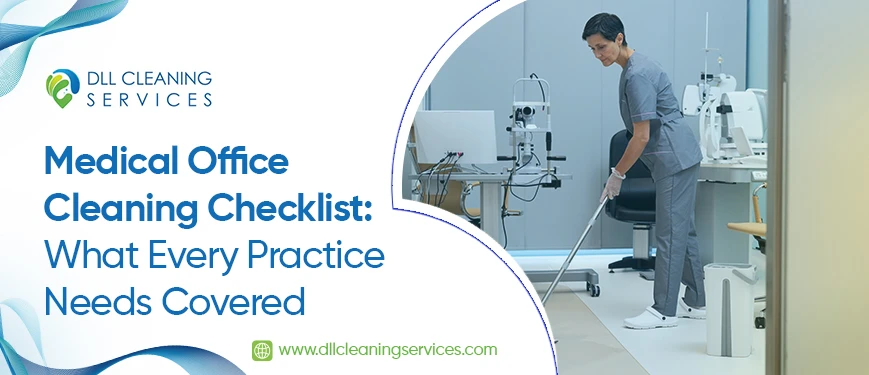
Medical Office Cleaning Checklist: What Every Practice Needs Covered
A structured checklist ensures that nothing gets skipped, every surface gets the right level of attention, and the practice stays compliant with OSHA and CDC standards.
-
Waiting Room and Reception Area
The waiting room sees more foot traffic than any other part of the office. Sick and healthy patients share the same chairs, touch the same sign-in screens, and sit in proximity throughout the day. Surface hygiene in this space directly affects how much cross-contamination occurs before patients even enter an exam room.
Daily Checklist
- Wipe and disinfect all seating surfaces, armrests, and side tables
- Clean reception counter, sign-in devices, and payment terminals
- Disinfect door handles, light switches, and elevator buttons
- Empty waste bins and replace liners
- Vacuum or mop all flooring
- Clean interior glass and partitions
- Restock hand sanitiser stations
Magazines, shared tablets, and children’s toys are high-contact items that many cleaning protocols overlook. If your practice keeps any of these in the waiting area, they need to be disinfected daily or removed entirely.
Did You Know?
According to the CDC, approximately 1 in 31 hospitalised patients has at least one healthcare-associated infection on any given day. Environmental surface contamination is a recognised contributor to pathogen transmission across all healthcare settings, including outpatient offices.
-
Examination and Treatment Rooms
Exam rooms carry the highest contamination risk in the facility. Every patient who sits on the table, grips the armrest, or touches the counter leaves behind pathogens that the next patient can encounter. Proper disinfection between visits is the most important cleaning task in the entire office.
Between-Patient Cleaning
- Disinfect the exam table, stirrups, and headrest
- Wipe all counter surfaces, sinks, and faucet handles
- Disinfect light switches, door handles, and cabinet pulls
- Replace table paper and restock disposable supplies
- Wipe down any equipment used during the visit
End-of-Day Deep Cleaning
- Disinfect all horizontal surfaces, including shelving and equipment trays
- Clean and disinfect the flooring using a hospital-grade solution
- Wipe down walls and baseboards at contact height
- Empty sharps containers if at capacity and replace biohazard liners
- Clean light fixtures and air vents
The distinction between cleaning and disinfecting matters here. Cleaning removes dirt and debris. Disinfecting kills pathogens. Medical exam rooms require both, in that order, using EPA-registered hospital-grade products. Skipping the cleaning step and going straight to disinfectant reduces its effectiveness because organic matter on the surface blocks the chemical from doing its job.
-
Restrooms
Medical office restrooms serve patients who may be immunocompromised, post-surgical, or providing biological samples. The cleaning standard here needs to go well beyond what a typical commercial restroom receives.
Daily Checklist
- Disinfect toilets, urinals, and all flush mechanisms
- Clean and disinfect sinks, faucets, and soap dispensers
- Wipe mirrors and all touchable surfaces
- Disinfect door handles, locks, and light switches
- Mop floors using hospital-grade disinfectant
- Restock paper products, soap, and hand sanitiser
- Empty waste and biohazard bins
Restrooms should be checked and spot-cleaned at least twice during business hours on top of the full end-of-day cleaning. High patient volume makes a single daily pass insufficient.
-
Staff Areas and Break Rooms
Staff break rooms are often the most neglected spaces in a medical office because they are not patient-facing. But healthcare workers carry pathogens on their hands, scrubs, and shoes from clinical areas into these shared spaces throughout the day. An unwiped break room table becomes a bridge between the exam room and every staff member who eats there.
Daily Checklist
- Disinfect countertops, tables, and appliance handles
- Clean the sink and faucet
- Wipe the microwave interior and exterior
- Empty trash and replace liners
- Sweep and mop the flooring
Our cleaning services teams at DLL handle staff areas the same way we handle patient-facing spaces. Cross-contamination between clinical and break room environments is a documented risk, and treating the break room as a low priority is how that risk goes unmanaged.
-
Hallways, Corridors, and Common Touchpoints
The spaces between rooms accumulate foot traffic, airborne particles, and surface contact throughout the day. They connect clinical areas to non-clinical zones, making every door handle and handrail a potential transfer point for pathogens.
Daily Checklist
- Disinfect all handrails, door handles, and push plates
- Wipe light switches and thermostat controls
- Clean and disinfect water fountain buttons and spouts
- Vacuum or mop all corridor flooring
- Dust air vents and return grilles
Quick Check:
High-touch surfaces in medical environments should be disinfected multiple times per day. Door handles and shared equipment see hundreds of contacts daily. A single end-of-day wipe does not meet the standard for a space where infection control is the baseline expectation.
-
Administrative and Office Areas
Front office workstations, billing areas, and private offices handle patient records, insurance documents, and incoming mail. These spaces may not carry the same biological risk as exam rooms, but staff move between clinical and administrative areas constantly.
- Disinfect keyboards, mice, phones, and desk surfaces
- Wipe filing cabinet handles and drawer pulls
- Clean monitors and screens using an appropriate solution
- Empty waste bins and shred bins
- Vacuum flooring and dust all surfaces
How often should a medical office be professionally cleaned?
Most medical offices require daily professional cleaning. Practices that see high patient volume or perform procedures may need multiple cleanings per day, including between-patient disinfection and a full end-of-day deep clean. The right frequency depends on the type of practice and the procedures performed.
What cleaning products are required for medical offices?
Medical offices should use EPA-registered, hospital-grade disinfectants effective against the specific pathogens relevant to the practice. Products must be applied according to label instructions, including proper contact time. Standard commercial cleaning products do not meet healthcare facility requirements.
Bottom Line
Every room in a medical office carries a level of biological risk that standard commercial cleaning is not equipped to handle. A structured, room-by-room checklist ensures each space receives the right products, the right frequency, plus the right level of attention based on the risk it carries. That consistency protects patients, supports staff safety, plus helps practices stay compliant with healthcare standards—especially when working with providers offering office cleaning New York services tailored to medical environments.
DLL Cleaning Services has supported healthcare facilities across Manhattan, Queens, Brooklyn, plus Yonkers since 2013. Our trained teams follow healthcare-specific cleaning protocols using EPA-registered disinfectants. Each visit follows a documented office cleaning checklist through our digital tracking system, so nothing is missed plus every task remains verifiable.
A safer clinical environment starts with a cleaning system designed for healthcare.
Author Profile

- At DLL Cleaning Services, we believe a clean space is more than just tidy — it's peace of mind. Our professional team is background-checked, insured, and trained to deliver a thorough, reliable clean every single time. We serve Manhattan, Brooklyn, Queens, the Bronx, Yonkers, and surrounding areas with residential and commercial cleaning services tailored to your schedule and needs. Whether it's a weekly refresh, a deep clean, or a move-in/move-out service, we show up on time and leave your space spotless. Your satisfaction is our standard — not just our goal.
Latest entries
 BlogsSeptember 23, 2026How Much Do Office Cleaning Services Cost?
- BlogsSeptember 23, 2026Benefits of Hiring Professional Office Cleaners
- BlogsSeptember 23, 2026Janitorial vs. Commercial Cleaning: What’s the Difference?
- Deep CleaningSeptember 23, 2026How to Deep Clean Your Home: A Room-by-Room Checklist